


Dhiraj Kandel
Managing DirectorSchedule a free consultation with our expert counselors to discuss your study
The essentials at a glance
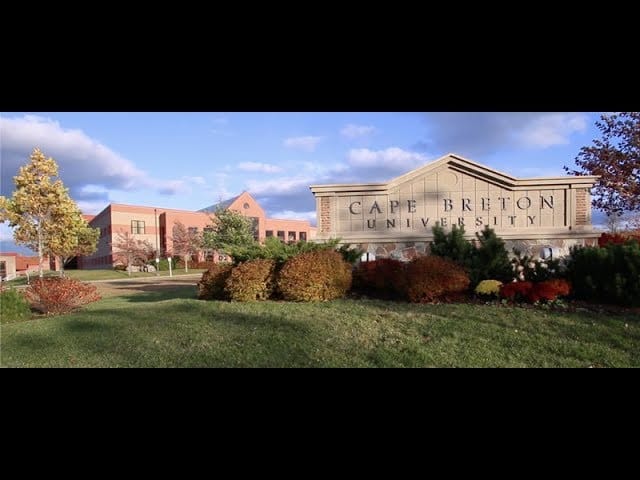
Cape Breton University (CBU) is a public university in Sydney, Nova Scotia, and the only degree-granting institution on Cape Breton Island. It suits Nepali students who want a Canadian degree: business degrees with majors, short master's degrees in AI and business analytics, digital marketing and healthcare leadership, and a hospitality degree with paid internships, all on one campus.
You need IELTS 6.5 with no band under 6.0 for most bachelor's and master's degrees, or 7.0 for nursing and healthcare leadership. CBU doesn't publish an acceptance rate; offers depend on meeting your program's grade and English requirements while seats are open.
Main points from this page
Cape Breton University (CBU) is a public university in Sydney, Nova Scotia, and the only degree-granting institution on Cape Breton Island. It grew from a junior college opened in 1951, became the University College of Cape Breton in 1982 and took its current name in 2005. It teaches bachelor’s and master’s degrees on one campus, through its Shannon School of Business and four other schools. CBU says it is home to more than 7,000 international students from 70 countries.
This profile is for Nepali students considering CBU for a bachelor’s degree after +2 or a master’s degree after their bachelor’s. It covers why students choose it, where it is, what it costs, when programs start, work rights, scholarships and a few programs open to international students. The programs open to you, with credential, length and campus, are in our CBU programs guide. Entry requirements, documents and the application steps are in our CBU admissions guide.
Because it is a public Canadian university whose full-time, in-person bachelor’s and master’s degrees all count toward a PGWP, with strong business, AI and analytics, engineering technology and health degrees.
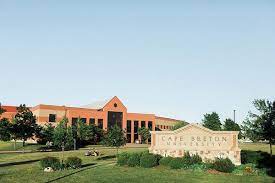
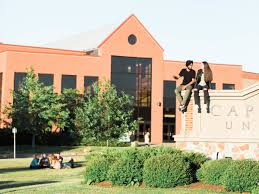
CBU has one campus, on Grand Lake Road in Sydney, Nova Scotia, and all of its programs for international students are taught there.
| Campus | City | Province | What it is |
|---|---|---|---|
| Cape Breton University, Sydney campus (1250 Grand Lake Road) | Sydney | Nova Scotia | The only campus: business, AI and analytics, engineering technology, science, arts, health, nursing and the residences |
We found no private partner campuses teaching CBU programs in Canada. The off-campus version of CBU’s MBA is open only to domestic students, so international students study in Sydney. If a program is ever offered at a private partner college, remember that students who started such a curriculum-licensing program after 15 May 2024 can’t get a PGWP. CBU’s campus tours and maps page has a map and virtual tours.
For 2026/27, a bachelor’s degree costs about CAD 23,800 a year in tuition and mandatory fees, and a master’s degree about CAD 25,900 to 32,300 in its first year.
That is roughly NPR 26 to 35 lakh a year. To see what these amounts are worth today, use our CAD to NPR forex converter. The bachelor’s figure is CAD 23,794.40 for a full year of 10 courses, and it already includes the international health plan (CAD 1,283 a year). CBU lists every program’s total on its tuition and fees page.
The 16-month master’s degrees (AI and Business Analytics, Digital Marketing and Healthcare Leadership) cost about CAD 35,200 in total. The two-year MBA in Community Economic Development costs about CAD 51,000, and the BScN advanced-standing route about CAD 37,600 a year. Lab fees, textbooks, residence and meals are extra; the international cost breakdown shows each fee.
To accept your offer you pay a non-refundable tuition deposit; the amount is in your acceptance letter. If your study permit is refused and you haven’t enrolled in courses, CBU refunds the deposit minus a CAD 500 administration fee. If CBU finds you aren’t eligible for a PAL, the whole deposit is refunded; the full rules are in CBU’s international tuition deposit refund policy.
Living costs come on top. For your study permit, IRCC asks you to show CAD 23,448 for a year of living expenses plus your first-year tuition. See our proof of funds guide and the cost of studying in Canada page for a monthly budget.
CBU’s bachelor’s degrees start in September, January and May, its 16-month master’s degrees start only in September, and the MBA starts in September, January or July.
International applications usually close in mid-October for January starts, mid-February for May starts and mid-May for September starts. They can close earlier if a program’s seats fill, and the dates for each program are on CBU’s international application deadlines page.
For example, the Bachelor of Business Administration, the Bachelor of Engineering Technology and the Bachelor of Hospitality and Tourism Management take international students in all three terms. The Bachelor of Health Sciences (Public Health) starts in September or January. The Master of Artificial Intelligence and Business Analytics and the Master of Digital Marketing start in September only.
Aim to apply 9 to 12 months before your start date so there is time for the offer, the deposit, the PAL, your study permit and housing.
If you track document dates and deadlines in Bikram Sambat, our Nepali date converter turns B.S. dates into A.D. dates. For the full calendar, read our guide to Canada intakes.
Yes. You can work up to 24 hours a week off campus while classes are on, and CBU’s full-time, in-person bachelor’s and master’s degrees lead to a Post-Graduation Work Permit (PGWP).
For the PGWP, the rules depend on your credential:
At least half of the program must be taken in class, and online study doesn’t count, so the online-only Master of Education degrees don’t qualify. The Bachelor of Engineering (Transfer) covers only the first two years at CBU; you must finish the degree at Dalhousie University to be eligible. CBU’s page still quotes the older 20-hour work limit, but IRCC’s current limit is 24 hours a week. Our PGWP guide for Nepali students explains each rule.
CBU considers international students who come straight from high school for its entrance scholarships, from CAD 500 a year up to the Chancellor’s Scholarship of CAD 30,000 over four years.
How the entrance scholarship works:
CBU gives about CAD 2.6 million in scholarships and bursaries a year, and students with an 80% average in a semester can also get an in-course scholarship of CAD 300 to 500. Details are on CBU’s scholarships and bursaries page. Our Canada scholarships guide lists other awards that Nepali students can apply for.
CBU accepts the NEB +2 with about a 65% average for a bachelor’s degree, or a bachelor’s with a B average for a master’s, plus IELTS 6.5 with no band under 6.0.
Each degree adds its own Grade 12 subjects: the BBA needs English and Math, and the BSc and Bachelor of Engineering Technology also need two sciences. The MBA asks for a 75% average and a GMAT or GRE score, and the BScN and Master of Healthcare Leadership need IELTS 7.0. PTE is 59 with no score under 50.
To see where your +2 grades stand, convert your NEB GPA to a percentage with our NEB GPA calculator. Documents and the application steps are in our CBU admissions guide.
CBU teaches bachelor’s degrees, with majors inside them, and four on-campus master’s degrees; international students can apply to eight bachelor’s programs in all three terms, plus nursing, engineering transfer and the master’s degrees.
The programs below are a selection open to international students in AI and analytics, business, engineering technology, hospitality and health, each checked on CBU’s own program pages. Because all of them are degrees, every one of them is PGWP-eligible. Watch for programs that are not: the Master of Education degrees are online only, and the Manufacturing stream of engineering technology is taught fully online.
CBU has no computer science or data science bachelor’s degree, so IT students usually look at the Master of Artificial Intelligence and Business Analytics after a bachelor’s. Our CBU programs guide lists more programs with their credential, length and campus. For each type of program, see our guides to a BBA in Canada, studying AI in Canada and a master’s in Canada.
Artificial Intelligence
Duration:
16 months
Part time jobs:
Yes, up to 24 hours a week in term
PGWP eligibility:
Eligible (CBU: all full-time, in-person master's degrees)
IELTS:
6.5 (no band under 6.0)
TOEFL:
80 (no score under 20), or 4.5 on the new scale
PTE:
59 (no score under 50)
*Note:
For holders of a four-year bachelor's in science, math, computing, business, economics or engineering with a B average and a statistics course. Taught in person with a 420-hour internship or master's project; September starts.
Duration:
4 years
Part time jobs:
Yes, up to 24 hours a week in term
PGWP eligibility:
Eligible (CBU: all full-time, in-person bachelor's degrees)
IELTS:
6.5 (no band under 6.0)
TOEFL:
80 (no score under 20), or 4.5 on the new scale
PTE:
59 (no score under 50)
*Note:
Joins after +2 with Grade 12 English and Math. Majors and concentrations include Accounting, Finance, Human Resources, Marketing and Supply Chain Management; international starts in September, January and May.
Duration:
16 months
Part time jobs:
Yes, up to 24 hours a week in term
PGWP eligibility:
Eligible (CBU: all full-time, in-person master's degrees)
IELTS:
6.5 (no band under 6.0)
TOEFL:
80 (no score under 20), or 4.5 on the new scale
PTE:
59 (no score under 50)
*Note:
For holders of a four-year bachelor's with a B average in the last 60 credits. No co-op; you finish with a master's project. Taught in person; September starts.
Duration:
3 years
Part time jobs:
Yes, up to 24 hours a week in term
PGWP eligibility:
Eligible (CBU: all full-time, in-person bachelor's degrees)
IELTS:
6.5 (no band under 6.0)
TOEFL:
80 (no score under 20), or 4.5 on the new scale
PTE:
59 (no score under 50)
*Note:
A three-year degree after +2 with Grade 12 English and Math, including two paid internships. International starts in September, January and May.
Engineering Technology
Duration:
3 years
Part time jobs:
Yes, up to 24 hours a week in term
PGWP eligibility:
Eligible (CBU: all full-time, in-person bachelor's degrees)
IELTS:
6.5 (no band under 6.0)
TOEFL:
80 (no score under 20), or 4.5 on the new scale
PTE:
59 (no score under 50)
*Note:
Joins after +2 with Grade 12 English, Math and two sciences. The stream has a co-op option; other streams include Electronics and Controls, Chemical, Petroleum and Environmental Studies. Starts in September, January and May.
Duration:
4 years, or 2 years on the accelerated route
Part time jobs:
Yes, up to 24 hours a week in term
PGWP eligibility:
Eligible (CBU: all full-time, in-person bachelor's degrees)
IELTS:
6.5 (no band under 6.0)
TOEFL:
80 (no score under 20), or 4.5 on the new scale
PTE:
59 (no score under 50)
*Note:
After +2 with Grade 12 English, Math and two sciences including chemistry, or the two-year accelerated route if you hold a science (or similar) degree or diploma. Starts in September or January.
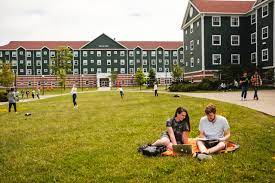
CBU has four residence buildings on its Sydney campus, from single and double dorm rooms to shared apartments, costing about CAD 2,380 to 4,300 a semester.
Cabot Residence and one other hall have apartment-style units with shared kitchens, and Harriss Hall has single rooms with a dining hall. You can apply once you have your CBU email address; there is a CAD 25 application fee and a CAD 700 confirmation deposit when you get a room offer. Off campus, CBU tells students to budget CAD 1,000 a month and warns that housing in the area is limited. See CBU’s on-campus residence page and its off-campus living page, and don’t travel before you have somewhere to stay.
Yes, if you want a Canadian degree rather than a college diploma. CBU is a public university where every full-time, in-person bachelor's and master's degree is PGWP-eligible, with strong options in business, AI and analytics, hospitality and engineering technology. It is a small campus in Sydney, Nova Scotia, where housing is limited, so plan your room early and check that your program is taught in person.
CBU is a public university in Sydney, Nova Scotia, not a private college. It grew from a junior college opened in 1951, became the University College of Cape Breton in 1982 and has been Cape Breton University since 2005. It awards bachelor's and master's degrees.
Through CBU's own online application, not a provincial portal. You create a CBU Future Student Account, fill in the application, pay the fee (CAD 80 for bachelor's programs, CAD 100 for master's) by Visa or Mastercard, then upload your transcripts and English score. Decisions appear in the same account.
For 2026/27, a bachelor's degree costs CAD 23,794 a year in tuition and mandatory fees, including the international health plan. The 16-month master's degrees cost about CAD 35,200 in total, and the MBA about CAD 51,000 over two years. Living costs are extra: our cost page estimates CAD 1,300 to 2,500 a month in Canada.
CBU says all its full-time, in-person bachelor's and master's degrees are PGWP-eligible, including the BBA, the Bachelor of Engineering Technology, the Bachelor of Hospitality and Tourism Management and the Master of Artificial Intelligence and Business Analytics. The online-only Master of Education degrees are not, and the Bachelor of Engineering (Transfer) counts only once you finish the degree at Dalhousie.
CBU's only campus is at 1250 Grand Lake Road, Sydney, Nova Scotia B1P 6L2, on Cape Breton Island in eastern Canada. All its programs for international students, and its four residence buildings, are on this campus.

Reference links
Important guidance note
This page provides general guidance about studying abroad. Requirements, fees and policies can change. For advice about your situation, speak with a Goreto counsellor before applying.
Book Your Free Consultation
From choosing the right country to finding scholarships and housing, our counselors will guide you at every step.
Choose the right country based on your goals
Find courses that match your career plan
Get guidance on colleges and universities
Plan your finances, scholarships & part-time jobs
Plan your abroad stay & post-study plan
Schedule a free consultation with our expert counselors to discuss your study

Schedule a free consultation with our expert counselors to discuss your study