


Dhiraj Kandel
Managing DirectorSchedule a free consultation with our expert counselors to discuss your study
The essentials at a glance
The moment +2 ends in Nepal, life suddenly becomes very loud for students. Relatives start asking questions. Friends begin posting IELTS/PTE stories. Some are preparing for entrance exams to pursue bachelors in Nepal, some are applying abroad, and some honestly still have no idea what they want to do next.
Main points from this page
The moment +2 ends in Nepal, life suddenly becomes very loud for students. Relatives start asking questions. Friends begin posting IELTS/PTE stories. Some are preparing for entrance exams to pursue bachelors in Nepal, some are applying abroad, and some honestly still have no idea what they want to do next. And somewhere between all this pressure, comparison, and confusion, students quietly sit with one thought in their head:
“Am I making the right decision for my future?”
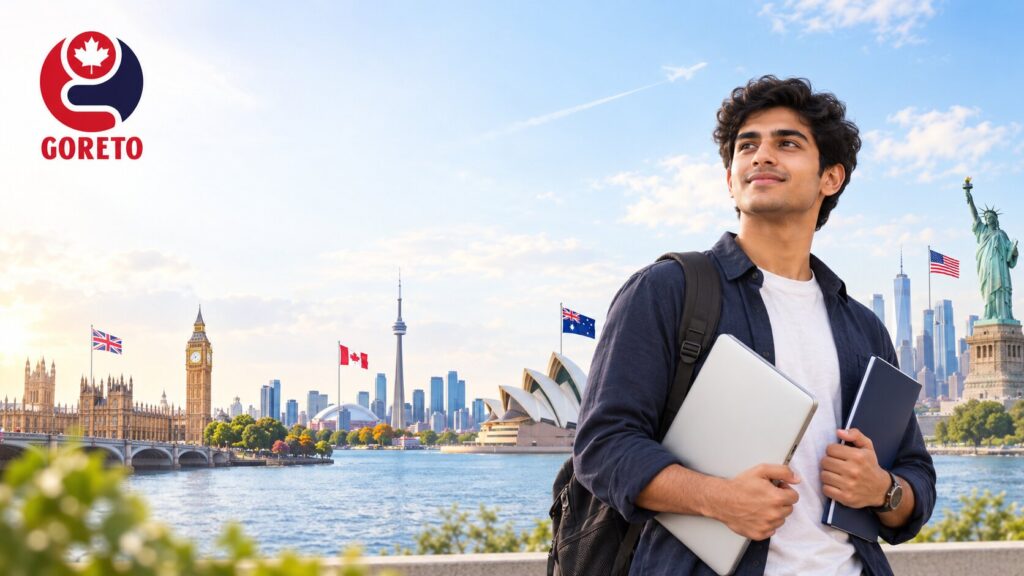
For many Nepali students today, studying abroad after high school to pursue their bachelors degree feels like the next step. Countries like Australia, Canada, the United Kingdom, and the United States have become major destinations for bachelor’s studies. But behind all the airport photos, visa celebration posts, and exciting reels, there is a reality that deserves to be talked about honestly too.
Not negatively. Not unrealistically positive either. Just honestly.
Studying abroad is not just about education.
It is about changing your entire life at an age where most students are still figuring themselves out.
For Nepali students especially, this transition can feel emotionally huge. Most of us grow up in homes where family is deeply involved in everyday life. Parents still worry if you ate properly. Someone reminds you to wake up. Meals are prepared. Festivals feel warm. Home feels familiar. Then suddenly, at 18 or 19, you land in a completely different country alone. And reality begins there.
At first, everything feels exciting. New airport. New country. New room. New University. New friends. New freedom. But after a few weeks or months, many students start experiencing something they never expected this strongly:
Homesickness. Not the “I miss home a little” type.
The real kind. The kind where you randomly miss normal tea at home. The sound of your family talking in the next room. Your own bed. Dashain, Tihar and all the festivals back home. Roaming around with friends in your hometown and many more. Some students struggle quietly with loneliness for the first time in their life. As honestly, adapting abroad is not easy.
| Expectation | Reality |
|---|---|
| “Life abroad is easy.” | Most students balance studies, work, rent, cooking, and stress together. |
| “You start earning immediately.” | Part-time work helps, but managing expenses is still difficult for many students. |
| “You become independent overnight.” | Independence takes time, your learn from mistakes, and emotional adjustment. |
| “Everyone abroad is happy.” | Many students silently deal with pressure, homesickness, and anxiety. |
Some students work late-night shifts and attend morning classes tired. Some struggle understanding accents and classroom systems initially. Some feel isolated despite being surrounded by people.
And because social media mostly shows only the exciting parts, many students feel guilty admitting they are struggling. But struggling at the beginning is more common than people think.
Yes. But depends.
For many students, it becomes one of the most life-changing experiences they ever have.
There is a reason why students who move abroad after +2 often adapt better over time compared to many students who move later for master’s degrees.
At a younger age, students are usually more flexible. They slowly build confidence, communication skills, independence, and emotional maturity while growing into adulthood itself. Over time, many students become stronger versions of themselves.
For the first time, students learn how to handle life completely on their own. Cooking. Budgeting. Managing time. Paying bills. Handling pressure. These are real-life skills.
Living outside your comfort zone changes people. Many students become more confident, disciplined, and self-aware after facing challenges independently.
Students meet people from different cultures, backgrounds, and perspectives. That exposure itself changes how they see the world.
International education can create access to industries, technologies, and opportunities that may not always be easily available in Nepal. But again, none of this comes without effort.
One of the biggest problems today is that many students choose abroad simply because everybody else is doing it.
Friend went abroad.
Relative suggested it.
Social media made it look perfect.
That is dangerous.
Because studying abroad is not a trend. It is a serious life decision.
Students need to ask themselves important questions:
These questions matter a lot more than people actually realize.
And honestly, that is normal. The pressure to have your entire future sorted immediately after +2 is unrealistic. Life rarely works that perfectly. What matters most is making informed decisions with realistic expectations, not blindly following trends.
Studying abroad after +2 can be exciting, rewarding, difficult, emotional, and life-changing all at once. It gives students opportunities, exposure, and personal growth. At the same time, it also brings homesickness, pressure, loneliness, and responsibility.
Both realities are true.
And maybe students need to hear both sides more often. Because behind every “study abroad success” story, there are usually lots of sacrifice, adjustment, fear, growth, and resilience that nobody sees online.
Important guidance note
This page provides general guidance about studying abroad. Requirements, fees and policies can change. For advice about your situation, speak with a Goreto counsellor before applying.


Book Your Free Consultation
From choosing the right country to finding scholarships and housing, our counselors will guide you at every step.
Choose the right country based on your goals
Find courses that match your career plan
Get guidance on colleges and universities
Plan your finances, scholarships & part-time jobs
Plan your abroad stay & post-study plan
Schedule a free consultation with our expert counselors to discuss your study

Schedule a free consultation with our expert counselors to discuss your study