


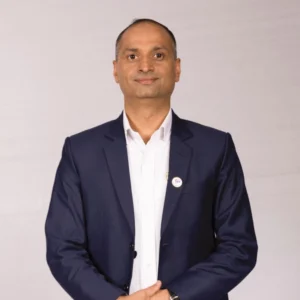
Dhiraj Kandel
Managing DirectorSchedule a free consultation with our expert counselors to discuss your study
The essentials at a glance
The USA F-1 visa process from Nepal can feel confusing for many students who dream of studying in the USA. From course and university selection to I-20, SEVIS fee, DS-160, visa interview, bank balance, social media screening and passport collection, every step needs proper preparation. This guide explains the full F-1 visa process in a simple step-by-step way for Nepali students. Step What you need to do 1.
Main points from this page
The USA F-1 visa process from Nepal can feel confusing for many students who dream of studying in the USA. From course and university selection to I-20, SEVIS fee, DS-160, visa interview, bank balance, social media screening and passport collection, every step needs proper preparation.
This guide explains the full F-1 visa process in a simple step-by-step way for Nepali students.
| Step | What you need to do |
|---|---|
| 1. Choose your course and university | Shortlist suitable SEVP-approved universities based on your profile, budget and career goals |
| 2. Prepare your admission documents | Prepare your passport, academic transcripts, certificates, recommendation letters, SOP, CV if required and English test score such as IELTS, TOEFL, PTE or Duolingo. Some programs may also require SAT, GRE or GMAT. |
| 3. Apply to the university | Submit your application and required documents |
| 4. Get your admission offer | If the university accepts you, it sends your admission or offer letter |
| 5. Get your I-20 | Complete the university’s required steps, and the institution issues your Form I-20 |
| 6. Pay the I-901 SEVIS fee | Pay the SEVIS fee using the SEVIS ID on your I-20 |
| 7. Complete the DS-160 form | Fill out the online U.S. visa application carefully |
| 8. Pay the visa fee and book your interview | Create your visa profile, pay the fee and book your interview date |
| 9. Prepare for the interview | Organize your documents and prepare honest answers about your study plans, finances and sponsor |
| 10. Attend the F-1 visa interview | Visit the U.S. Embassy in Maharajgunj, Kathmandu on your appointment date |
| 11. Wait for the decision | The officer may approve, refuse or place your case under further review |
| 12. Collect your passport | If the officer approves your visa, collect your passport after visa printing and prepare for travel |
The F-1 visa interview takes place at the U.S. Embassy in Nepal on the booked appointment date.
During the interview, the visa officer checks whether you are a genuine student. So, answer clearly and honestly. The officer may ask about your university, course, sponsor, bank balance, income source, future plan, family ties in Nepal and sometimes your social media or online presence. Do not memorize fake answers. Instead, make sure your DS-160, I-20, bank documents, sponsor details and interview answers all match.
After the interview, the officer may approve your visa, refuse it or place your case under further review.
| Result | What it means |
|---|---|
| Approval | The Embassy usually keeps your passport for visa printing |
| 214(b) refusal | The officer refused the visa because your profile did not satisfy the requirements at that time |
| 221(g) / pending review | The Embassy needs more checking, documents or administrative processing |
Always follow what the paper or email says.
If you get a pink slip, it usually means your visa decision is pending. The Embassy may need extra time to check your social media, bank balance, sponsor details or other background information.
If they ask for documents, submit only those documents. If they ask you to make your social media public for screening, make the accounts public and wait for their update via email. There is no fixed processing time.
If the Embassy emails you after a pending decision, read the message carefully. The email may ask you to submit documents, update information, make social media public or submit your passport. If the Embassy asks for passport submission, submit it through the instructed process and wait for visa processing.
If the officer approves your visa, the Embassy keeps your passport for visa printing. After printing, your U.S. visa profile shows the passport collection or delivery update. In Nepal, your email or visa profile may instruct you to collect your passport through the assigned Nepal Investment Bank Ltd. branch or official collection location. Therefore, always check the exact pickup details before going.
Be genuine from the beginning. Prepare your financial documents properly, understand your sponsor’s income source and know how your study cost will be covered. Clearly explain your study plan, future goals and intention to return to Nepal after completing your education in the USA. Also, review your social media and make sure it does not conflict with your visa profile.
A strong F-1 profile is built on honest information, realistic funding, clear goals and confident communication.
The first step is to choose a suitable course and apply to a SEVP-approved college or university in the USA.
I-20 is the official document issued by your U.S. university after admission. It is required for SEVIS fee payment, DS-160 and the F-1 visa interview.
Yes. F, M and J visa applicants may be subject to online presence review. Students may be asked to keep social media accounts public or open.
Pink slip is usually understood as a pending decision. It may mean further review, social media screening, bank balance checking or administrative processing.
White slip is usually understood as direct refusal or rejection. Students should read the exact reason written on the paper.
There is no fixed timeline. Some students may receive updates within a few days, while others may wait longer depending on their case.
Yes. Goreto’s USA expert counselors guide students from the beginning of the process, including course and university selection, application guidance, I-20 support, DS-160 guidance, visa interview booking, document preparation and mock interview practice.
Important guidance note
This page provides general guidance about studying abroad. Requirements, fees and policies can change. For advice about your situation, speak with a Goreto counsellor before applying.

Book Your Free Consultation
From choosing the right country to finding scholarships and housing, our counselors will guide you at every step.
Choose the right country based on your goals
Find courses that match your career plan
Get guidance on colleges and universities
Plan your finances, scholarships & part-time jobs
Plan your abroad stay & post-study plan
Schedule a free consultation with our expert counselors to discuss your study
Schedule a free consultation with our expert counselors to discuss your study