


Dhiraj Kandel
Managing DirectorSchedule a free consultation with our expert counselors to discuss your study
The essentials at a glance
IRCC may refuse an application if the applicant does not meet the correct category, cannot prove the relationship, lacks financial support, or fails to satisfy the requirements for temporary residents.
Main points from this page
You can apply for a Canada open work permit from Nepal by first checking your IRCC eligibility category and preparing the required supporting documents. After that, you need to complete the online application, pay the required fees, give biometrics, complete a medical exam if required, and wait for IRCC’s decision.
An open work permit allows an eligible applicant in Nepal to work for most employers in Canada without first receiving a job offer. Many Nepali applicants seek this permit because their spouse is studying or working in Canada, or because they want a legal way to work in Canada without being tied to a single employer.
An open work permit is not available to everyone. IRCC gives it only to applicants who meet specific eligibility criteria under a valid category. This guide explains what an open work permit is, who may qualify, how to apply from Nepal, what documents may be needed, and what mistakes to avoid.
An open work permit in Canada allows an eligible temporary resident to work for most employers. It does not usually name a single employer, job title, or work location.
An open work permit allows eligible spouses, partners, and certain applicants to work legally while living in Canada temporarily. It offers more flexibility than an employer-specific work permit, as the worker can usually change employers without applying for a new employer-tied permit.
An open work permit may still include conditions. These conditions can limit:
IRCC may refuse an application if the applicant does not meet the correct category, cannot prove the relationship, lacks financial support, or fails to satisfy the requirements for temporary residents.
To apply for an open work permit in Canada from Nepal, first check your eligibility under IRCC rules and prepare the required documents. Then submit your online application, pay the fees, give biometrics if required, and wait for IRCC’s decision.
Start by checking whether you qualify under the latest IRCC rules.
Ask these questions first:
For spouse cases, eligibility should be checked before preparing the file. Many refusals occur because the applicant applies under old rules or with an incomplete understanding.
Your documents may include a passport, a digital photo, a marriage certificate, proof of relationship, a spouse’s study permit or work permit, proof of enrolment or employment, financial documents, and other supporting papers. Your documents should prove your identity, relationship, eligibility, funds, and the purpose of your travel.
The exact list of documents depends on your category. For a spouse open work permit, the application usually requires strong evidence of the relationship and the principal applicant’s valid status in Canada. Missing or weak documents can increase the risk of refusal.
Most applicants apply through an online IRCC account. You will need:
IRCC says online applicants use their accounts to pay fees, submit applications, and check their status.
You must complete the application forms carefully. Names, dates, passport details, travel history, employment history, and family information should match the information in your documents.
Your explanation letter should clearly state:
IRCC charges a CAD $155 work permit processing fee for a work permit application. If you are applying for an open work permit, you usually also need to pay the open work permit holder fee of CAD $100, bringing the total cost to CAD $255 before biometrics or other costs.
If biometrics are required, the biometrics fee is currently CAD $85 for one applicant or CAD $170 for eligible family members applying at the same time.
| Fee Type | Current IRCC Fee |
| Work permit processing fee | CAD $155 |
| Open work permit holder fee | CAD $100 |
| Basic open work permit total | CAD $255 |
| Biometrics, if required | CAD $85 per person |
| Family biometrics, if eligible | CAD $170 maximum |
Many applicants from Nepal need to give biometrics. Biometrics usually include fingerprints and a photo. IRCC sends a biometrics instruction letter after the fee and application steps are completed.
Applicants in Nepal may use the approved visa application center process, commonly connected with VFS Global Nepal, for biometrics. VFS does not decide the application. IRCC makes the decision.
A medical exam may be required based on your stay length, job type, travel history, or IRCC instructions. Some jobs in healthcare, childcare, education, or close-contact settings may need medical clearance before you can work in those fields.
Use an IRCC-approved panel physician if a medical exam is required. Do not complete a random medical checkup and assume IRCC will accept it.
After submission, you can track your application status through your IRCC account. IRCC may ask for more documents, a medical exam, biometrics, passport submission, or clarification.
A strong application does not guarantee approval. IRCC assesses eligibility, admissibility, documents, purpose, and credibility.
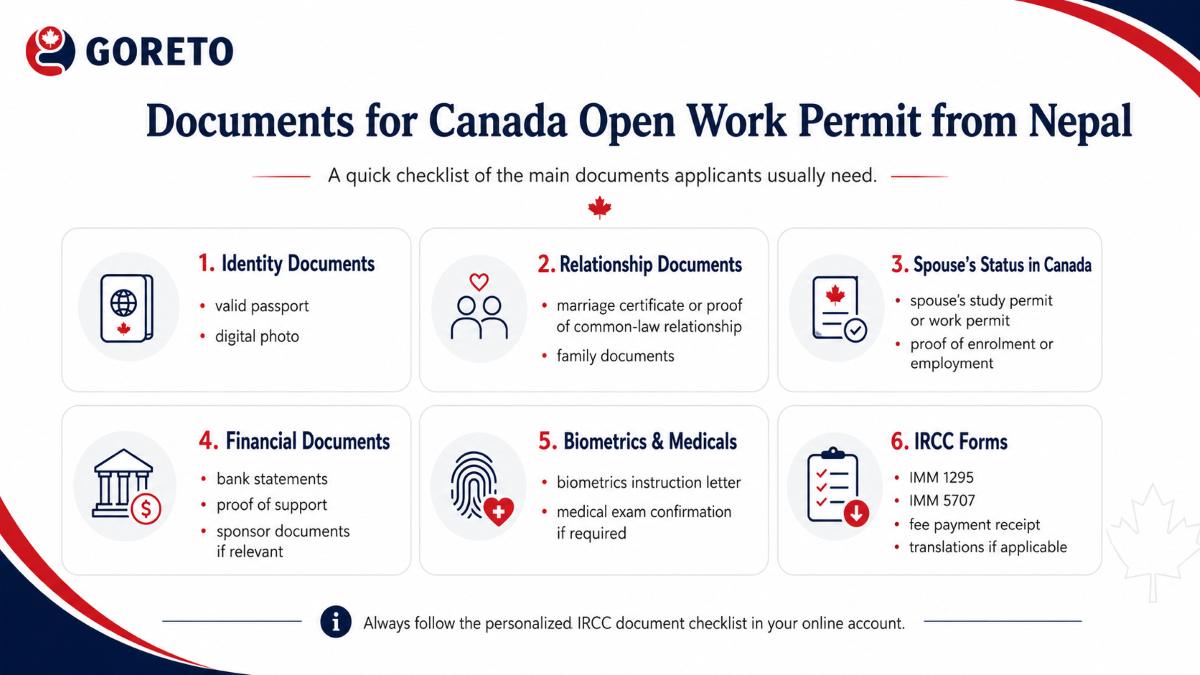
The documents required for a Canada open work permit from Nepal depend on your eligibility category, such as a spouse open work permit, a post-graduation work permit, a family member of a worker, or a permanent residence-related work permit.
IRCC provides applicants with a personalized document checklist after they complete the online application, so they should always follow the checklist in their IRCC account.
| Document | Why It Is Needed |
| Valid passport | To prove your identity and travel eligibility. Your passport should be valid and not expired. |
| Digital photo | IRCC requires a photo that meets visa photo specifications. |
| Application for Work Permit Made Outside Canada: IMM 1295 | This is the main application form for applicants applying for a work permit from outside Canada. |
| Family Information Form: IMM 5707 | Usually required to provide details about your parents, spouse or partner, and children. |
| Marriage certificate or proof of common-law relationship | Required if you are applying for a spouse or common-law partner open work permit. Common-law applicants may also need to complete Form IMM 5409. |
| Proof of spouse’s status in Canada | This may include your spouse’s study permit, work permit, visitor record, or letter of introduction, depending on the application type. |
| Proof of spouse’s study or work eligibility | For student-spouse cases, this may include a DLI letter of acceptance, proof of enrolment, or transcripts. For worker-spouse cases, this may include the worker’s permit, employment letter, job details, duties, NOC/TEER category, or offer letter. |
| Proof of relationship and family documents | Birth certificates, adoption papers, or other civil documents may be needed if dependent children are included. |
| Proof of eligibility for your open work permit category | This depends on your pathway. For example, PR-related applicants may need an AOR letter, while PGWP applicants may need graduation-related documents. |
| Proof of financial support, if relevant | Bank statements, income documents, or sponsor support documents may help show that you can support yourself during your stay, especially if requested in the checklist. |
| Police clearance certificate, if requested | IRCC may ask for a police certificate to confirm that the applicant has no criminal record. |
| Medical exam confirmation, if required | Some applicants need an immigration medical exam, depending on their country of residence, history, or the type of work they plan to do in Canada. The exam must be completed by an IRCC-approved panel physician. |
| Biometrics instruction letter | After submitting the application, IRCC may send a letter requesting that the applicant provide fingerprints and a photo at an official biometrics collection point. |
| Fee payment receipt | Proof that the work permit processing fee, open work permit holder fee, and biometrics fee, if applicable, have been paid. |
| Use of Representative Form — IMM 5476, if applicable | Required only if a consultant, lawyer, or representative is helping with the application. |
| Certified translations, if applicable | Any document not in English or French must be translated, and IRCC has specific rules for translations and affidavits. |
For most Nepali applicants, the most important documents are the passport, application forms, a marriage certificate if applying as a spouse, the spouse’s Canadian status documents, proof of study or work in Canada, financial documents, biometrics, and medical exam documents, if required. However, there is no single fixed checklist for every applicant.
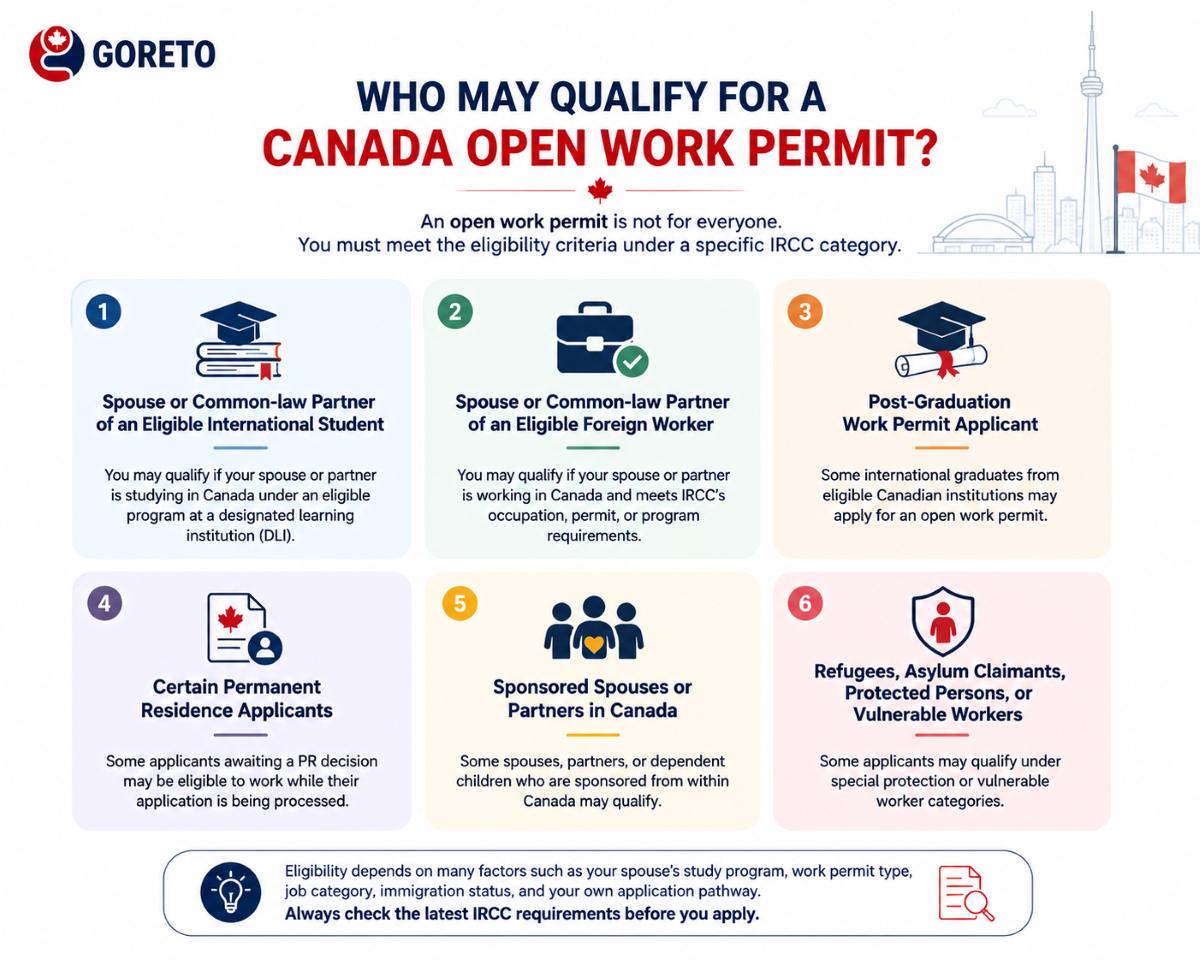
Certain spouses of eligible students or workers, post-graduation work permit applicants, some PR applicants, and people under special protection or vulnerable worker categories may apply for a Canada open work permit from Nepal, but only if they meet the eligibility criteria for an IRCC category.
Nepali applicants may be eligible for a Canada open work permit if they belong to one of these categories:
| Applicant Category | What It Means |
| Spouse or common-law partner of an eligible international student | You may qualify if your spouse is studying a master’s program of 16 months or longer, a PhD or certain professional programs (rules since 21 January 2025). See our Canada dependent visa guide. |
| Spouse or common-law partner of an eligible foreign worker | You may qualify if your spouse is working in Canada and meets IRCC’s occupation, permit, or program requirements. |
| Post-Graduation Work Permit applicant | Some international graduates from eligible Canadian institutions may apply for a Post-Graduation Work Permit (PGWP), which is an open work permit. |
| Certain permanent residence applicants | Some applicants awaiting a PR decision may be eligible to work while their applications are being processed. |
| Sponsored spouses or partners in Canada | Some spouses, partners, or dependent children who are sponsored from within Canada may qualify. |
| Refugees, asylum claimants, protected persons, or vulnerable workers | Some applicants may qualify under special protection or vulnerable worker categories. |
Your eligibility may depend on factors such as your spouse’s study program, level of study, work permit type, job category, remaining work permit duration, immigration status, or your own application category. Because these rules can change, you should always check the latest IRCC requirements before preparing your Canada open work permit application.
The current estimated processing time for a Canada work permit application is published on the IRCC processing times page, which changes every week, so check it before you plan. This estimate is typically used for open work permit applications from Nepal, but it is not a guaranteed timeline for approval.
Processing times for a Canada open work permit are estimates, not fixed timelines or guaranteed decision dates. The timeline usually starts after a complete application is received and can take longer if biometrics, medical exams, background checks, missing documents, or additional information requests are involved.
Yes, an open work permit usually allows you to work for most employers in Canada without needing a job offer or a Labor Market Impact Assessment. However, it does not mean there are no rules. You cannot work for an employer listed as non-compliant, and you cannot work for businesses that regularly offer adult entertainment or related services.
Some open work permits may also include conditions about the type of work or location, especially if a medical exam or specific program condition applies. Applicants should always read the conditions printed on their work permit before starting work in Canada.
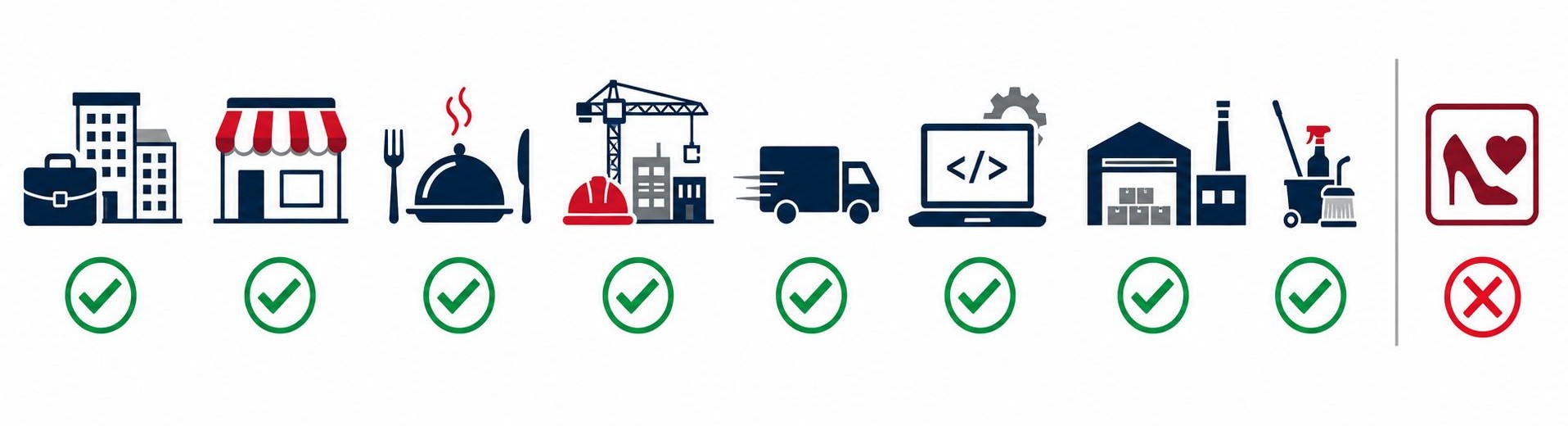
A Canadian open work permit allows the holder to work for most employers in Canada, but it is not unlimited. The permit holder must comply with all conditions set out in the work permit, including rules on the type of work, work location, length of stay, and any medical or program-specific restrictions.
For Nepali applicants, the most important point is that an open work permit allows complete flexibility in work, but it still has legal conditions. Before accepting a job in Canada, the permit holder should check the expiry date, employer restrictions, medical conditions, location conditions, and SIN requirements. Violating work permit conditions can lead to loss of status, refusal of future applications, or difficulty extending the stay in Canada.
You may be unsure about your eligibility, the documents required, your spouse’s status, or your previous visa history. Even simple mistakes can be costly, so it is important that you get the right guidance before applying. Goreto Consultancy can help you explore the best open work permit pathways for you, manage documents, and prepare a clear, honest, and strong application.
Yes, you can apply from Nepal if you meet the eligibility criteria for an open work permit category under IRCC. Many applicants apply as spouses or partners of eligible international students or workers in Canada. Always verify current IRCC rules before applying.
Eligibility depends on the applicant’s category. Common categories may include spouses of eligible international students, spouses of certain foreign workers, some PGWP applicants, some PR-related applicants, vulnerable workers, refugees, protected persons, and other categories listed by IRCC.
No, a work permit allows you to work in Canada. A visa or travel document allows you to enter Canada, if required. If your work permit is approved from Nepal, IRCC may also issue the required travel document depending on your situation.
Your spouse may be eligible only if you meet IRCC’s current eligibility rules. For example, IRCC currently lists certain eligible study categories, such as master’s programs lasting 16 months or longer, doctoral programs, and selected professional programs. Always verify your current eligibility before applying.
Important guidance note
This page provides general guidance about studying abroad. Requirements, fees and policies can change. For advice about your situation, speak with a Goreto counsellor before applying.

Book Your Free Consultation
From choosing the right country to finding scholarships and housing, our counselors will guide you at every step.
Choose the right country based on your goals
Find courses that match your career plan
Get guidance on colleges and universities
Plan your finances, scholarships & part-time jobs
Plan your abroad stay & post-study plan
Schedule a free consultation with our expert counselors to discuss your study

Schedule a free consultation with our expert counselors to discuss your study