


Dhiraj Kandel
Managing DirectorSchedule a free consultation with our expert counselors to discuss your study
The essentials at a glance
The F-2 application is separate from the principal student’s application, although both are connected through the F-1 student’s status. Understanding the wider USA student visa requirements can help you see how the dependent process fits into the overall visa preparation. How Much Does an F-2 Visa Cost?
Main points from this page
Studying in the United States does not always mean moving there alone. If you hold or are applying for F-1 status, your qualifying spouse or child may be able to accompany you to the USA or join you later under F-2 classification.
F-2 dependents have their own visa documents and conditions. Their work and study rights are different from those of the F-1 student, and each dependent needs separate documentation, including an individual Form I-20.
This article explains who can qualify for F-2, what spouses and children can do in the USA, which documents are needed, how applying together compares with joining later, and when a change of status may become relevant.
A qualifying spouse or unmarried child of an F-1 student can apply for F-2 classification to accompany the student to the United States or join them later. F-2 is a dependent category, so eligibility is based on the family relationship with the principal F-1 student.
Each dependent must have their own visa application and individual Form I-20. They are also entered separately in SEVIS, even though their F-2 record remains connected to the principal student’s F-1 record.
The principal student must continue to maintain valid F-1 status, while the spouse or child remains in F-2 status as a dependent.
F-2 is the dependent classification for the qualifying spouse and unmarried children under 21 of an F-1 student. It allows eligible family members to live in the United States with the principal student, while their status remains tied to the F-1 student’s valid status.
| Family Member | F-2 Eligibility |
| Spouse | Can qualify as the F-1 student’s dependent |
| Unmarried child under 21 | Can qualify as an F-2 child |
| Parent | Does not qualify for F-2 |
| Brother or sister | Does not qualify for F-2 |
| Fiancé or fiancée | Does not qualify as an F-2 spouse before marriage |
F-2 is a dependent category rather than an independent work or student classification. That means the spouse or child has their own immigration status and documents, but their rights and stay in the USA are still connected to the principal F-1 student.
F-1 is the principal student status, while F-2 is for a qualifying spouse or child who accompanies or joins that student. The main differences involve study, employment, SEVIS fees and whether the person’s status depends on someone else.
| Area | F-1 Student | F-2 Dependant |
| Main purpose | Full-time academic study | Accompany or join an F-1 student |
| Full-time university study | Permitted as the principal student | Requires the appropriate student status for a full course of postsecondary study |
| Part-time postsecondary study | Allowed subject to F-1 requirements | Allowed below a full course of study |
| Employment | Certain work may be permitted under F-1 rules | Employment is not permitted |
| On-campus employment | May be permitted under F-1 conditions | Not permitted |
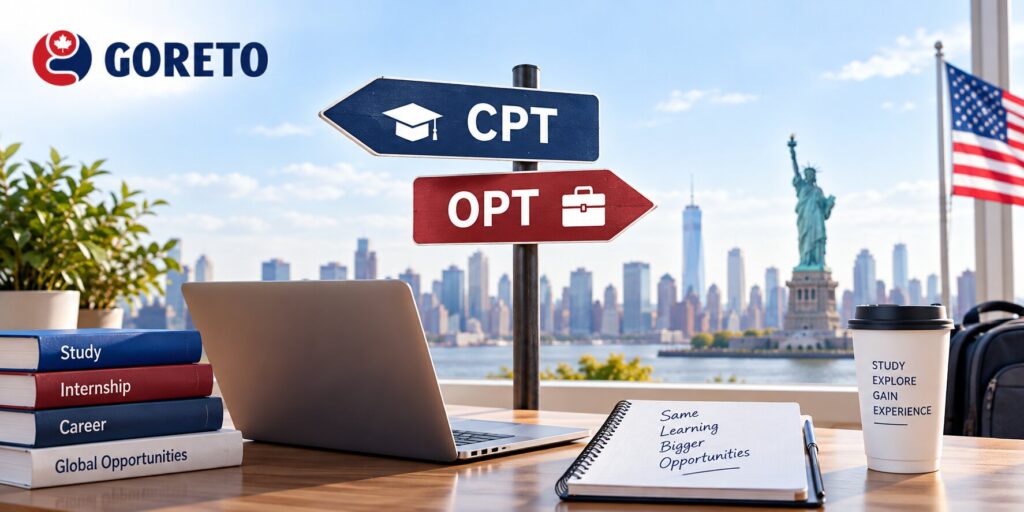
| CPT | May be available to eligible students | Not available in F-2 status |
| OPT | May be available to eligible students | Not available in F-2 status |
| Individual Form I-20 | Required | Required |
| I-901 SEVIS fee | Required for the principal F-1 applicant | Not required for F-2 dependants |
| Status linked to another person | No | Yes, linked to the principal F-1 student |
In practical terms, F-2 allows eligible family members to stay with the F-1 student, but it does not give them the same study or employment rights as the principal student.
An F-2 spouse is not authorised to work in the United States while in F-2 status. The dependent classification is meant to allow a qualifying spouse or child to stay with the principal F-1 student, but it does not provide independent employment rights.
This means the work options available to eligible F-1 students do not carry over to an F-2 spouse. On-campus employment, Curricular Practical Training (CPT) and Optional Practical Training (OPT) are tied to F-1 rules and are not available simply because the spouse is connected to an F-1 student.
If the spouse later wants to work in the USA, they would need to qualify for a separate immigration classification that provides employment authorisation. F-2 itself should not be treated as a work route.
An F-2 spouse can study in the United States, but the rules depend on the type and intensity of the course. While remaining in F-2 status, they can generally take part in less than a full course of postsecondary study and may also join recreational or avocational courses.
If the spouse wants to begin a full course of academic or vocational study, they normally need to move into an appropriate student classification such as F-1, M-1 or J-1, depending on the programme. The official F-2 study rules distinguish between part-time study that can be taken in F-2 status and full-time postsecondary study that requires the appropriate student status.
So, someone planning to take a few university classes may be able to remain in F-2 status, while a spouse intending to complete a full Bachelor’s, Master’s or vocational programme should first check which student classification the course requires.
Children in F-2 status can attend elementary and secondary school full-time, from kindergarten through Grade 12. They do not need to change to F-1 status simply to attend ordinary K-12 education in the United States.
The school also does not need to be SEVP-certified just because the child holds F-2 status. This is different from some rules that apply when a student enters the USA independently in F-1 status for school-level study.
Once the child wants to move into a full-time postsecondary programme, such as a Bachelor’s degree, the situation changes. They may then need to obtain an appropriate student classification, such as F-1, before beginning a full course of study.
Each qualifying F-2 spouse or child needs an individual Form I-20 issued in their own name. The F-1 student’s school creates the dependent record in SEVIS, while that record remains connected to the principal student’s F-1 record.
Having a separate Form I-20 does not mean the dependent must also pay a separate SEVIS fee. Current U.S. student visa guidance states that F-2 spouses and children receive their own Forms I-20 but do not pay the I-901 SEVIS fee.
The distinction is simple: every F-2 dependent needs their own Form I-20, but the $350 I-901 SEVIS fee applies to the principal F-1 student, not separately to each F-2 family member.
An F-2 applicant needs their own visa documents, along with evidence that shows their relationship to the principal F-1 student. Some additional documents may also be useful depending on whether the dependent is applying at the same time or joining the student later.
| Document | Purpose / When It Is Relevant |
| Valid passport | Required for the visa application and travel |
| Individual Form I-20 | Confirms the applicant’s F-2 dependent record |
| DS-160 confirmation page | Shows that the visa application has been submitted |
| Visa application fee receipt | Required where applicable |
| Photograph | Must meet the current U.S. visa photo requirements |
| Marriage certificate | Used to show the spouse relationship |
| Birth certificate | Used to show the parent-child relationship |
| Copy of the principal F-1 student’s documents | Connects the dependant to the F-1 student |
| Financial evidence | May be requested to show how family expenses will be covered |
| Current F-1 enrolment or status evidence | Particularly useful when the dependant is joining later |
The U.S. Department of State’s student visa guidance lists documents such as the passport, DS-160 confirmation, Form I-20 and applicable fee receipt as part of the visa application process. F-2 applicants also need evidence of their qualifying relationship with the principal F-1 student.
Other supporting documents can vary by case, so items such as financial evidence or current enrolment records should not be treated as a fixed checklist for every applicant.
The F-2 application starts after the principal F-1 student’s school creates the dependent record. Each spouse or child then follows their own visa process using an individual Form I-20.
The F-2 application is separate from the principal student’s application, although both are connected through the F-1 student’s status. Understanding the wider USA student visa requirements can help you see how the dependent process fits into the overall visa preparation.
The current government costs for an F-2 applicant are straightforward, with the main charge being the nonimmigrant visa application fee.
| Cost | F-2 Applicant |
| Nonimmigrant visa application fee | USD 185 |
| Approx. NPR at USD 1 = NPR 153.40 | NPR 28,400 |
| I-901 SEVIS fee | No separate fee |
| Nepal reciprocity/issuance fee | None under the current schedule |
The current U.S. visa application fee schedule confirms the USD 185 fee. The NPR amount is approximate and can change with the exchange rate.
Families should also budget beyond the visa fee, as bringing a spouse or child can increase the overall cost of studying in the USA through accommodation, food, insurance, transport and other living expenses.
F-2 dependants can apply around the same time as the principal F-1 student or apply later to join them in the United States. The timing usually comes down to when the family is ready to travel, how finances are arranged and whether the F-1 student has already started their programme.
| Applying With the F-1 Student | Joining the F-1 Student Later |
| F-1 and F-2 applications are prepared around the same period | The principal F-1 student is already in the USA |
| Each applicant still needs separate visa documents | Each dependent still needs their own Form I-20 and visa application |
| Family finances can be planned together from the beginning | Updated F-1 enrolment or status evidence may be useful |
| Family may travel together if all visas are issued | The dependant travels after receiving their own visa |
| Housing and family arrangements can be planned before departure | The F-1 student may already have housing and study arrangements in place |
Applying later is commonly described as following to join. In that situation, the dependant still applies in their own right for F-2 and should be ready to show their relationship to the principal student and the student’s current F-1 status.
An F-2 dependant can generally remain in the United States while the principal F-1 student continues to maintain valid F-1 status and the dependant still meets the F-2 requirements. Their authorised stay is based on duration of status, not simply on the expiry date printed on the visa.
This is an important distinction. The visa is mainly used for travel and admission to the United States, while the person’s actual stay after entry is governed by their immigration status and the principal student’s F-1 situation.
After the F-1 student completes the programme and any authorised practical training, the student and qualifying F-2 dependants generally have a 60-day grace period for departure, transfer or another permitted next step. Situations involving OPT, school transfers or a change of status should be checked with the school’s DSO because the timing can differ.
An F-2 spouse who wants to begin a full-time postsecondary programme may need to change to F-1 or another appropriate student classification before starting that course.
The process usually involves gaining admission to an SEVP-certified institution, receiving a new Form I-20 for the student classification and applying to USCIS for a change of status where eligible. Form I-539 is used for this type of request under current USCIS procedures.
The timing matters because someone cannot begin a full course of study while relying on F-2 status if the programme requires F-1 or another student classification. The required change should be approved before the full-time study begins.
A person already in the United States may be able to request a change to F-2 status without leaving the country, provided they are eligible and currently maintaining a valid nonimmigrant status.
The process generally involves filing Form I-539 with USCIS and showing the qualifying relationship to the principal F-1 student. The current USCIS Form I-539 guidance should be checked before filing because procedures, fees and eligibility requirements can change.
An approved change of status only changes the person’s immigration status inside the United States. It does not place an F-2 visa in the passport, so someone who later travels abroad may need to obtain the appropriate F-2 visa before returning to the USA.
If the principal F-1 student’s status ends or changes, the dependent’s F-2 status may also end or need to change because F-2 is tied directly to the principal student’s F-1 status.
When the F-1 student completes the programme, changes to another immigration classification or loses F-1 status, the spouse or child’s F-2 position is affected as well. An F-2 child also stops qualifying once they are no longer an unmarried child under 21.
Families should therefore plan the next immigration step before the F-1 basis ends, especially where programme completion, a change of status or a child’s age could affect continued F-2 eligibility.
Most F-2 problems come from confusing dependent status with the rights given to the principal F-1 student.
Taking your spouse or child with you when you study in the USA from Nepal affects more than the dependent visa itself. Your study budget, housing, family living expenses, children’s schooling and travel timing should all be considered alongside the principal F-1 application.
If you want help comparing the practical side of studying in the USA with dependent planning, talk to Goreto Educational Consultancy. The team can help you look at your university plans, F-1 preparation and family requirements together before you move forward.
A qualifying spouse can apply for F-2 status to accompany the F-1 student or join them later. They need their own Form I-20 and visa application.
An unmarried child under 21 can qualify for F-2 status. Each child needs an individual Form I-20 and visa application.
F-2 status does not allow employment in the United States. On-campus work, CPT and OPT available to eligible F-1 students do not extend to F-2 spouses.
An F-2 spouse can take less than a full course of postsecondary study. Full-time academic study generally requires the appropriate student status, such as F-1.
F-2 children can attend kindergarten through Grade 12 full-time while remaining in F-2 status. They do not need F-1 status simply for ordinary K-12 study.
Each F-2 spouse or child needs an individual Form I-20 issued through the principal student’s school. The dependent record remains linked to the F-1 student’s SEVIS record.
F-2 dependants do not currently pay the separate I-901 SEVIS fee, even though each dependant receives an individual Form I-20.
The current F-category visa application fee is USD 185 per applicant. Nepal’s current reciprocity schedule lists no additional F-2 issuance fee.
A qualifying spouse can apply later to join an F-1 student already in the USA. They still need their own Form I-20, visa application and supporting relationship documents.
Important guidance note
This page provides general guidance about studying abroad. Requirements, fees and policies can change. For advice about your situation, speak with a Goreto counsellor before applying.

Book Your Free Consultation
From choosing the right country to finding scholarships and housing, our counselors will guide you at every step.
Choose the right country based on your goals
Find courses that match your career plan
Get guidance on colleges and universities
Plan your finances, scholarships & part-time jobs
Plan your abroad stay & post-study plan

Schedule a free consultation with our expert counselors to discuss your study

Schedule a free consultation with our expert counselors to discuss your study