

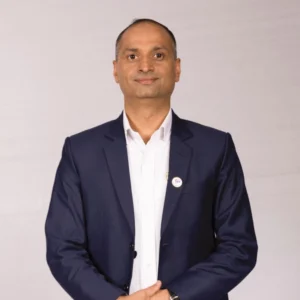
Dhiraj Kandel
Managing DirectorSchedule a free consultation with our expert counselors to discuss your study
Studying Sports Science is not just about studying athletes; it is a science comprising knowledge on human performance, prevention of injuries, and the physical health of individuals at all levels.
Through this blog, you get a step-by-step guide on how to study Sports Science in Australia as a Nepali student.
Here we are going to discuss all aspects of course levels, entry requirements, fees, visa processes, career outcomes, and PR pathways.
Be it your ambition to coach with top sports clubs or manage fitness activities, or enhance the health of the people in Nepal, with this guide, Australia can take off as your stepping-stone.
Choosing where and what to study is a big decision, but you don’t have to make it alone.
Recognised as the best educational consultancy in Nepal, Goreto has helped countless students study in Australia from Nepal by providing expert course counselling, application support, SOP writing, and pre-departure guidance, all at no cost.
We’re here to make your Sports Science dream in Australia a smooth and stress-free journey.
Australia is ranked at the top of the globe in both fields of Sports, Health sciences, and high-performance training, providing world-class amenities, close connections with industry, and a sport-related culture.
In the case of Nepali students, this will translate to having access to superior biomechanics labs, high-performance athletics/sports institutions, and rehabilitation centres.
All the skills learned in such an environment are respected and well-paid in Australia, as well as useful back in Nepal to create an impactful career there.
| Course Level | Duration | Key Focus Areas | Examples of Top Institutions |
| Diploma | 1 – 2 years | Fundamentals of anatomy, physiology, sports coaching, and exercise programming | TAFE NSW, Holmesglen Institute, Victoria University Polytechnic |
| Associate Degree | 2 years | Applied sports science, coaching methods, and health promotion | University of Canberra, Holmesglen Institute |
| Bachelor’s Degree | 3 years | Exercise physiology, biomechanics, nutrition, performance analysis | Deakin University, University of Sydney, University of Queensland |
| Master’s Degree | 1 – 2 years | Advanced exercise science, research methods, and sports rehabilitation | University of Queensland, University of Western Australia, Victoria University |
| PhD | 3 – 4 years | Specialised research in sports science, human movement, or allied health | University of Sydney, University of Queensland, University of South Australia |
Tip for Nepali students: Bachelor’s and Master’s degrees are the most common pathways to careers in sports science and allied health in Australia.
Diplomas and associate degrees can be used as entry points or for upskilling, but may have limited PR pathways.
Australian Sports Science programs require that students meet the necessities of the course, despite the standard academic and English requirements needed by Nepali students to fit in. Requirements also differ according to the level, and you must check with the targeted university or college.
| Course Level | Academic Requirement |
| Diploma | Completion of +2/Year 12 with a focus on science subjects preferred. |
| Associate Degree | Completion of +2/Year 12, ideally with biology, physical education, or related subjects. |
| Bachelor’s Degree | Completion of +2/Year 12 with strong results in science subjects. Some universities may require biology or physical education. |
| Master’s Degree | Bachelor’s degree in sports science, exercise science, physiotherapy, or a related field. |
| PhD | Master’s degree or equivalent research qualification in sports science or related discipline. |
| Course Level | IELTS | PTE | TOEFL iBT |
| Diploma / Associate Degree | Overall 6.0 (no band less than 5.5) | 50 (no band less than 42) | 60 (no band less than 8 in listening & reading, 18 in speaking, 17 in writing) |
| Bachelor’s Degree | Overall 6.5 (no band less than 6.0) | 58 (no band less than 50) | 79 (no band less than 13 in reading & listening, 18 in speaking, 21 in writing) |
| Master’s / PhD | Overall 6.5 – 7.0 (no band less than 6.0) | 58 – 65 (no band less than 50) | 79 – 94 (no band less than 13 in reading & listening, 18 in speaking, 21 in writing) |
When it comes to proper planning, as far as Nepali students are concerned, the cost of undertaking Sports Science in Australia is important to note. Tuition fees depend on the level of the course, the institution, as well as the city.
Metropolitan cities such as Sydney and Melbourne have also been said to be superior in cost of living, although they tend to provide more access to part-time employment opportunities and bigger recreation facilities such as sports.
Smaller cities, like Townsville, Hobart, or Rockhampton, are usually cheaper and can provide to even provide a longer post-study work visa and additional PR points.
| Course Level | Annual Tuition Fees (AUD) | Annual Tuition Fees (NPR) |
| Diploma | 18,000 – 22,000 | 16,11,720 – 19,68,440 |
| Associate Degree | 20,000 – 25,000 | 17,91,900 – 22,39,875 |
| Bachelor’s Degree | 28,000 – 38,000 | 25,07,060 – 34,02,610 |
| Master’s Degree | 30,000 – 42,000 | 26,87,850 – 37,59,990 |
| PhD | 32,000 – 45,000 | 28,69,040 – 40,36,275 |
Conversion based on 1 AUD = NPR 89.54. Rates may vary. Please check with Goreto Educational Consultancy for updated figures.
| Expense | Cost in AUD | Cost in NPR |
| Living Costs (accommodation, food, transport) | 21,041 | 18,82,610 |
| Overseas Student Health Cover (OSHC) | 500 – 700 | 44,770 – 62,678 |
| Student Visa (Subclass 500) | 710 | 63,573 |
| Books & Materials | 500 – 1,000 | 44,770 – 89,540 |
Tip: Studying in regional areas can reduce living costs and may give you visa advantages. Always factor in your city choice when budgeting.
Budgeting for Nepali students is not only about tuition but also the planning the whole experience.
The large sports facilities, elite clubs, and networking opportunities may be available in cities such as Sydney and Melbourne, but you obviously will have to deal with higher living expenses.
The same work can be cheaper in regional locations (Townsville, Rockhampton, or Launceston) and allow you access to regional research projects, smaller class sizes and visa enticements (longer post-study work rights, additional PR points).
The tricky part about picking the right place may lie between a high level of education and economic comfort.
Applying for a Sports Science course in Australia involves several steps, from choosing the right institution to preparing your visa documents.
The process is straightforward if you plan ahead, especially with guidance from a trusted education consultancy like Goreto Educational Consultancy.
In case you are of Nepalese student, it is vital to time your submission. E.g., in case you complete your +2/Bachelor exams in May/June, you can even aim at the February/July intake and would have time to prepare documents and have your visa processed.
Early application also enables you to get places in Universities that are highly sought after.
Talk to Goreto to discuss more and get a personalised recommendation for your case.
The main reason why a lot of Nepali students want to pursue a Sports Science course in Australia is to gain access to international career opportunities and even an avenue to migrate abroad. When you study in a metro area like Sydney, Melbourne, or Brisbane, you will be able to gain access to elite sports facilities and industry contacts.
Training within a specific regional territory (such as Rockhampton, Launceston, or Townsville), however, can provide you with additional post-study work rights and additional PR points, which can massively benefit you should migration be within your plan.
| Qualification Level | Stay Period (Metro Areas) | Stay Period (Regional Areas) |
| Bachelor’s Degree | 2 years | 3–4 years |
| Master’s Degree | 3 years | 4–5 years |
| PhD | 4 years | 5–6 years |
Stay durations may vary based on government updates and regional classifications. Always check the latest information from the Department of Home Affairs or consult Goreto Educational Consultancy for accurate guidance.
Sports Science graduates may qualify for PR through skilled migration if their role appears on Australia’s skilled occupation lists. Common PR pathways include:
When selecting the location of the study, it will be important for you to consider that your intended outcome is PR.
A great proportion of Nepali graduates purposely learn in local cities in order to optimise stay time and migration points, and others choose to learn in the metros to have exposure in the industry.
Make sure that you consult Goreto to align your career and migration needs with the appropriate alignment of the city and the course.
An Australian Sports Science degree allows graduates entry into a variety of careers in the areas of fitness, rehabilitation, research, and elite sport.
With the international currency of skills, the Nepalese students will be able to secure high-paying jobs in Australia or become directors of fitness initiatives, rehabilitation centres, and sports enterprises in their homeland with the prestige of the Australian certification.
| Job Role | Average Salary in Australia (AUD/year) | Approx. Salary in Nepal (NPR/year) |
| Exercise Physiologist | AUD 65,000 – 85,000 | NPR 57 – 75 lakh |
| Strength & Conditioning Coach | AUD 60,000 – 80,000 | NPR 53 – 71 lakh |
| Biomechanist | AUD 70,000 – 90,000 | NPR 62 – 80 lakh |
| Rehabilitation Specialist | AUD 65,000 – 85,000 | NPR 57 – 75 lakh |
| Sports Development Officer | AUD 60,000 – 78,000 | NPR 53 – 69 lakh |
Disclaimer: Salaries vary by location, experience, and employer. NPR conversion is based on an approximate rate of 1 AUD = 88 NPR and is subject to change.
Bachelor programs typically take 3 years, while Master’s degrees are 1–2 years full-time.
Yes — it offers global career opportunities, with strong demand in Australia and potential to pioneer sports development in Nepal.
Not necessarily. Most programs accept students from a science background, though having experience in fitness or sports can be beneficial.
Yes — international students can work up to 48 hours per fortnight during study periods and unlimited hours during breaks.
Some related roles are on Australia’s Skilled Occupation List, which can support PR applications.
Understandably, selecting the right university, visa procedures, or job opportunities may seem a daunting task; however, you do not have to solve it by yourself.
Goreto Educational Consultancy, the best educational consultancy in Nepal, has guided thousands of Nepali students to study in Australia with confidence.
From choosing the right country to finding scholarships and housing — our counselors will guide you at every step.
Choose the right country based on your goals
Find courses that match your career plan
Get guidance on colleges and universities
Plan your finances, scholarships & part-time jobs
Plan your abroad stay & post-study plan
Schedule a free consultation with our expert counselors to discuss your study

Schedule a free consultation with our expert counselors to discuss your study