

Dhiraj Kandel
Managing DirectorSchedule a free consultation with our expert counselors to discuss your study
Yes, dependents can study in Canada, but they may need a study permit depending on their age, study level, location, and program duration.
A dependent visa usually allows a family member to enter or stay in Canada as a temporary resident. An open work permit may allow a spouse to work. A study permit allows a foreign national to study in a program that usually lasts more than 6 months.
For adults, most long-term study in Canada requires a study permit. Short courses of 6 months or less may not require one, as long as the person maintains a valid temporary resident status.
For minor children, IRCC states that children applying from outside Canada need a study permit if they will study for more than 6 months. This includes children who come with parents whose study or work permits have been approved.
A dependent usually means a spouse, common-law partner, or dependent child who joins the main applicant in Canada. Nepali students often use the term “dependent” to refer to both spouses and children, but Canada applies different rules to each family member.
For Nepali students, dependents usually include:
Yes, a spouse can study in Canada as a dependent, but long-term study usually requires a study permit. A spouse cannot assume that a dependent visa or visitor status allows full-time college or university study.
A spouse may take a short course without a study permit when the course:
A spouse generally needs a study permit when the course:
Example: A spouse taking a 3-month English course may not need a study permit. A spouse taking a 2-year diploma program at a Canadian college generally needs a study permit. A spouse must also keep a valid status in Canada. Visitor status, work permit status, and study permit status serve different purposes.
Yes, a dependent child can study in Canada, but children applying from outside Canada usually need a study permit to study for longer than 6 months. This rule matters for Nepali families who plan to bring school-age children with them.
IRCC states that minor children outside Canada who want to study for 6 months or more must apply for a study permit before entering Canada. This includes children who come with a parent whose study or work permit has been approved.
School-level study includes:
A child may enter Canada as a visitor in limited cases, but visitor status does not always solve school enrollment issues. School boards may ask for immigration documents before registration. A study permit can clarify school admission, record-keeping, and future extensions.
Example: A Nepali student receives a study permit for a master’s program in Canada. The student’s 8-year-old child will attend elementary school for more than 6 months. The child should usually apply for a study permit before traveling to Canada.
A dependent needs a study permit when the study program is long-term or when IRCC rules require one for school enrollment. Adults and children follow different rules, and families should check the dependent’s exact situation before applying.
| Dependent type | Study duration | Study permit needed? |
| Spouse taking a short course | 6 months or less | Usually no |
| Spouse taking college or university program | More than 6 months | Yes |
| Minor child applying from outside Canada | More than 6 months | Yes |
| Minor child already in Canada with a parent authorized to work or study | School-level study | May study without a permit in some cases, but a study permit is still recommended |
A study permit not only supports legal compliance. It also helps with school registration, future extensions, and clarity of immigration records.
Key rule for Nepali families: do not treat a dependent visa as automatic permission for long-term study.
Yes, a spouse may be able to work and study in Canada, but work and study permissions are separate. A spouse does not automatically receive the right to work or study just because they are included as a dependent. They must meet the conditions of the status or permit they hold.
For work, a spouse may qualify for an open work permit only if the principal student meets Canada’s current eligible program rules. As of the latest rules, this may include students in:
Yes, a dependent can apply for their own study permit if they meet Canada’s normal study permit requirements. This option works well when a spouse wants to study independently in Canada.
A spouse can apply as a student, not only as a dependent. The application must show a genuine study plan and clear eligibility. To apply for a study permit, the dependent generally needs to show:
This can be a good option if the spouse has their own academic goals. For example, the main applicant may pursue a master’s program, while the spouse may later apply for a diploma, postgraduate certificate, or degree program that aligns with their background and career plan.
However, the application must make sense. The spouse should not apply for a random course only for visa purposes. Their study plan should connect with their education, work experience, future goals, and financial situation.
If a spouse applies for their own study permit, they should prepare a strong and genuine application.
A good dependent study permit application should explain:
For Nepali applicants, financial proof is especially important because the visa officer will look at the total family cost. If the main student, spouse, and child are all going to Canada, the family must show enough funds for tuition, living expenses, family members, and travel.
A dependent may be able to take some online courses, especially if the course is short, informal, or not part of a long Canadian academic program. However, if the dependent is enrolling in a Canadian institution for a long-term program, they should check whether a study permit is required.
The safest way to look at this is simple: if the course is longer than 6 months, formal, and leads to a certificate, diploma, degree, or credential, the dependent should confirm the study permit requirement before starting.
Many dependent study problems happen because families misunderstand Canadian visa rules. Here are the most common mistakes Nepali students and families should avoid.
A dependent visa or dependent status does not automatically allow a spouse to join a long-term college or university program. A long-term study usually requires a study permit.
An open work permit and a study permit are different. A spouse may be eligible to work, but that does not always mean they can study a long-term program without a study permit.
If a spouse wants to study a 1-year or 2-year program, they should not assume short-course rules apply. Programs longer than 6 months generally require a study permit.
When dependents are involved, financial proof becomes more important. The family must demonstrate funds not only for the main student but also for the spouse and children who are coming to Canada.
If the spouse applies for their own study permit, the purpose of study should be clear. A weak or random course selection can create doubts in the application.
Parents should plan their child’s schooling before travelling to Canada. If the child is applying from outside Canada and will study for more than 6 months, a study permit may be required before entry.
Education in Canada is managed by provinces and territories. School registration, documents, and local requirements may vary depending on the province. Quebec may also have additional requirements.
Nepali students should review study plans, dependent eligibility, visa status, and financial proof before bringing a spouse or child to Canada. A small mistake can affect school admission, permit approval, or future extension plans.
Before applying, check:
Goreto can help Nepali students understand Canada study and dependent visa rules before applying. A complete review can reduce confusion around spouse study permits, children’s schooling, open work permits, and financial documents.
Yes, your wife can study in Canada. If she wants to take a short course of 6 months or less, a study permit may not be needed. If she wants to join a long-term college or university program, she will usually need her own study permit.
Yes, your child may be able to attend school in Canada. If the child is applying from outside Canada and will study for 6 months or more, they generally need a study permit before entering Canada.
A minor child applying from outside Canada needs a study permit if they want to study for 6 months or more. Some minor children already in Canada may study without a study permit in specific cases, especially if a parent is authorized to work or study.
Usually, a study permit is not required for a course or program that lasts 6 months or less, as long as the person completes it within the authorized stay. However, a study permit may still be useful in some cases.
The safest option is to check the main student’s program, spouse eligibility, child schooling plan, financial documents, and study permit requirements before applying or traveling.
Nepali families can apply together or separately, depending on the case. The stronger option depends on the main student’s program, finances, spouse’s purpose, child’s schooling needs, and overall visa strategy.
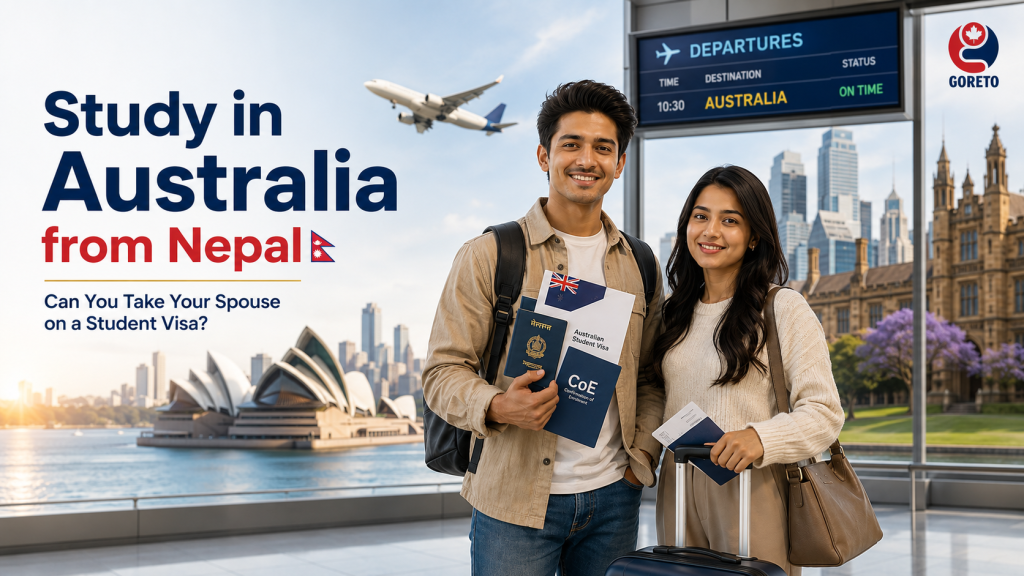
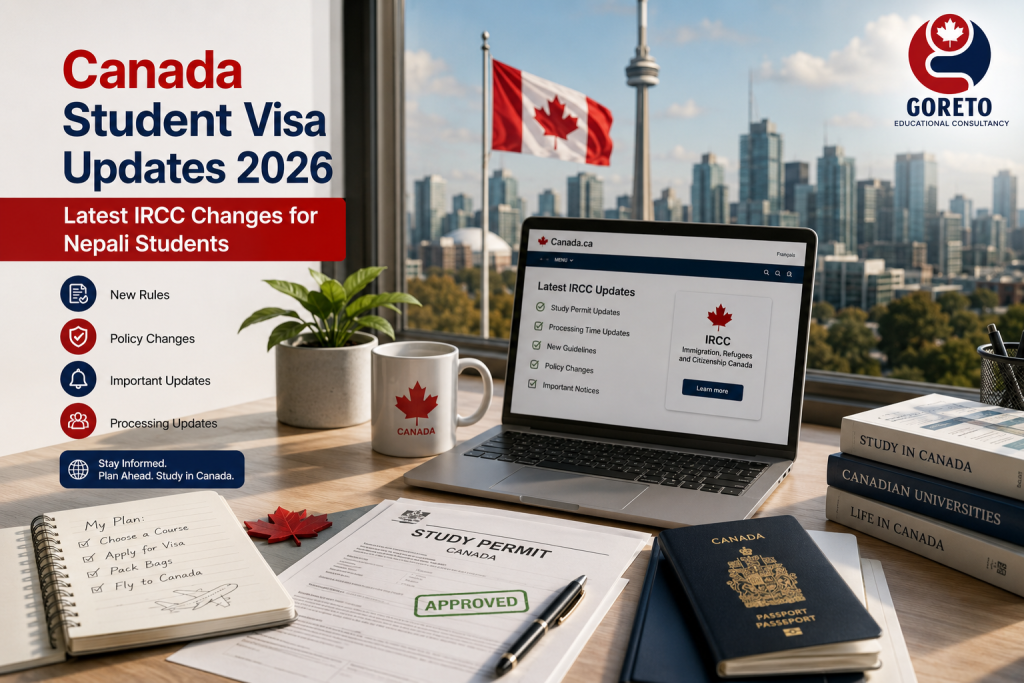
From choosing the right country to finding scholarships and housing — our counselors will guide you at every step.
Choose the right country based on your goals
Find courses that match your career plan
Get guidance on colleges and universities
Plan your finances, scholarships & part-time jobs
Plan your abroad stay & post-study plan
Schedule a free consultation with our expert counselors to discuss your study

Schedule a free consultation with our expert counselors to discuss your study