

Dhiraj Kandel
Managing DirectorSchedule a free consultation with our expert counselors to discuss your study
Some of the cheapest universities in the UK for international students include Wrexham University, Leeds Trinity University, York St John University, University of Chester, University of West of Scotland, Teesside University, University of Cumbria, University of Sunderland, and Staffordshire University. Fees can start from around £11,750–£17,500 per year, depending on the course, level, campus, and scholarships.
For Nepalese students, the cheapest option is not always the best option. You should compare tuition fees, location, living costs, scholarship options, visa financial requirements, part-time work rules, course quality, and future career value before making a final decision.
| Rank | University | Approx. International Undergraduate Tuition Fee | Best For | Key Note |
| 1 | Wrexham University | £11,750 per year | Students looking for one of the lowest published UK tuition fees | Wrexham lists its 2026/27 undergraduate international fee at £11,750. |
| 2 | Leeds Trinity University | £12,000 per year | Education, business, media, psychology, and social science courses | Leeds Trinity lists 2026/27 undergraduate courses, excluding Nursing, at £12,000 per year. |
| 3 | York St John University | £12,100 per year | Business, computer science, humanities, and creative courses | Several York St John undergraduate courses list international 2026 entry fees at £12,100 per year. |
| 4 | University of Chester | £14,950 per year | Students wanting a lower-cost university in a student-friendly city | Chester lists 2026/27 undergraduate international tuition at £14,950 per year, with lower first-year fees for foundation-year routes. |
| 5 | University of Suffolk | From £15,900 per year | Students looking for modern facilities and career-focused courses | Suffolk lists 2026/27 undergraduate international tuition from £15,900 to £18,870. |
| 6 | University of Cumbria | Around £16,000 per year | Practical courses, business, computing, education, and health-related subjects | Some Cumbria undergraduate course pages list 2026/27 international tuition at £16,000. |
| 7 | Teesside University | £17,000 per year | Computing, engineering, business, health, and applied subjects | Teesside lists its 2026/27 full-time undergraduate international fee at £17,000. |
| 8 | University of Greater Manchester / Bolton | Most fees around £17,500 per year | Students looking for a lower-cost option near Manchester | The university states that most international fees are currently £17,500 per year, excluding special category programmes. |
| 9 | Ravensbourne University London | £17,500 per year | Creative, design, media, technology, and digital courses | Ravensbourne lists 2026/27 undergraduate international annual fees at £17,500. |
| 10 | Anglia Ruskin University | From £17,500 per year | Business, healthcare, computing, engineering, and professional courses | ARU lists 2026/27 full-time international tuition from £17,500 to £21,200 per year. |
Here are some affordable UK universities that international students should compare based on tuition fees, location, scholarships, course options, and overall value.
Wrexham University is one of the strongest options to consider if tuition fees are your main concern. Its 2026/27 international fees are listed at £11,750 for undergraduate, £12,500 for MA/MSc, and £13,000 for MBA programs.
It may suit students seeking a lower-cost study destination in Wales, away from London’s higher cost of living. Students should still check course availability, intake options, scholarships, and employability support before applying.
Leeds Trinity University lists £12,000 per year for undergraduate courses, excluding Nursing for 2026/27, while Nursing courses are listed at £14,500.
Leeds can be a good option for students who want a large student city without having to choose London. It may suit students interested in business, media, education, psychology, and computing-related courses.
York St John University has competitive published fees for selected courses. For example, its International Business BA page lists £12,100 per year for international students for 2026 entry, while several postgraduate course examples list £11,800 for full-time international study in 2026/27.
This can be attractive for students who want a respected historic student city, but students should check each course page because fees vary by subject.
The University of Chester lists 2026/27 international fees of £14,950 for undergraduate, £15,500 for postgraduate, and £15,700 for MBA programmes. Foundation Year entry is listed at £11,250 for Year 1, followed by higher annual fees in later years.
Chester may suit students who want a broader range of courses and a smaller city environment. It is not always the cheapest, but it can still be affordable compared with higher-fee UK universities.
The University of the West of Scotland may be worth comparing, as its enhanced international scholarship page states that for selected 2026/27 class-based degree programmes, the net tuition fee payable is £13,000, while selected lab-based programmes have a net fee of £15,000.
This is a good reminder that “cheapest” should include scholarship-adjusted fees, not only published standard fees.
Teesside University London lists a standard international undergraduate fee of £17,000 per year, while full-time postgraduate taught degrees are listed between £10,000 and £17,000 per year, depending on the course.
Students should carefully compare the Middlesbrough and London options, as living costs and course fees may differ.
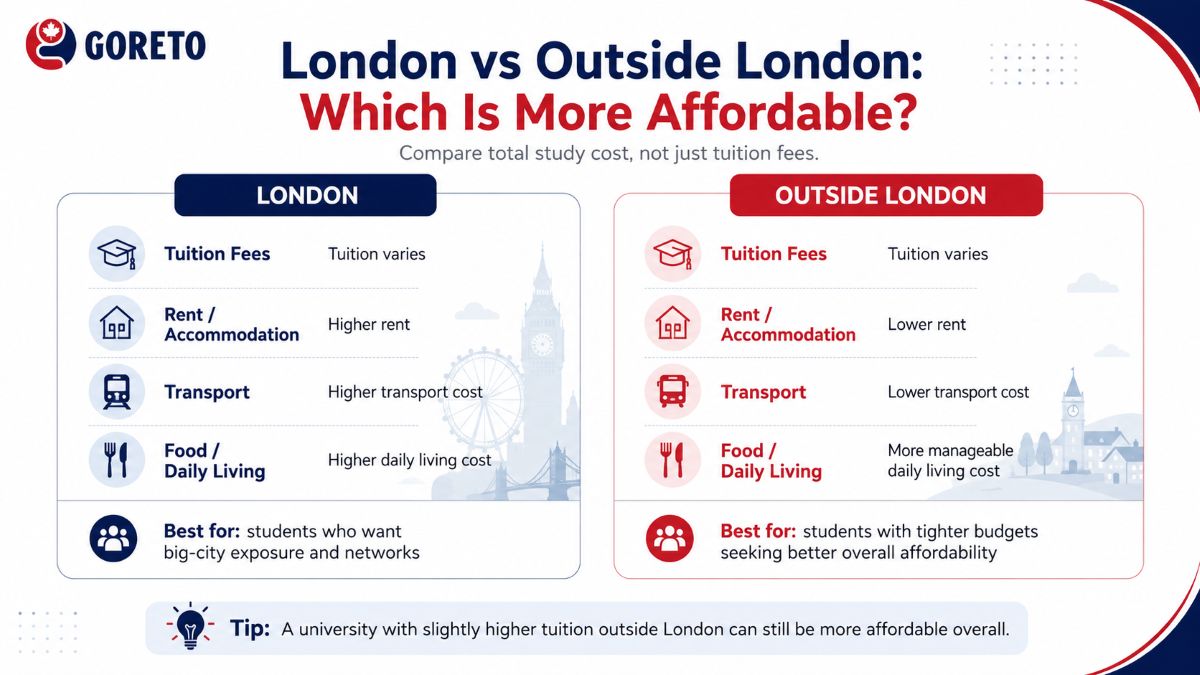
London can offer strong career prospects, but it usually increases the total cost of study. A London university with lower tuition fees can still be expensive because rent, transport, and food cost more.
| Location Type | Tuition Impact | Living Cost Impact | Best Choice For |
| London | Can be low, medium, or high | Usually highest | Students who need London networks |
| Large cities outside London | Often medium | Medium to high | Students who want city life and lower rent than in London |
| Smaller cities and towns | Often lower | Often lower | Students with tight budgets |
| Scotland’s rural or regional campuses | Varies | Often lower outside major cities | Students who accept longer travel routes |
| Wales and North England | Often competitive | Often lower | Students seeking affordable living |
The cheapest university in the UK for you is usually a university with low tuition, lower rent, scholarship access, and a course that supports your career plan.
For master’s students, the cheapest UK universities often depend heavily on the course. Business, management, public health, education, and some computing courses may be cheaper than lab-based, clinical, or specialist courses.
For Nepalese students, a one-year master’s program can be cost-effective, but the course must align with your academic background, future career plan, and visa eligibility.
A UK master’s degree often takes 1 year, whereas many countries use 2-year master’s programs. This shorter length can reduce rent, food, and transport costs, as well as lost work time. Example cost comparison:
| Study Route | Tuition Example | Living Cost Period | Total Cost Effect |
| One-year UK master’s | £13,000–£18,000 | 9–12 months | Lower total living cost |
| Two-year master’s in another country | Lower yearly tuition possible | 18–24 months | Higher total living cost possible |
| UK bachelor’s in England/Wales/NI | 3 years common | 3 years | Shorter than many 4-year systems |
| Scottish bachelor’s | 4 years common | 4 years | Higher total cost unless scholarship applies |
The one-year UK master’s route can be one of the most affordable options for international graduates who already hold a bachelor’s degree.
Students looking for low-cost universities in the UK as international students should compare cities as carefully as they compare universities.
Cities and regions outside London that may be worth comparing include:
These places may offer a more manageable lifestyle budget compared with central London. However, the actual cost depends on the type of accommodation, lifestyle, transport needs, and whether students live in university halls or private housing.
Yes, many affordable UK universities can be good choices. A lower fee does not automatically mean poor quality. Sometimes fees are lower because the university is outside London, has a different pricing strategy, offers scholarships, or focuses on widening access for international students.
But students should not choose only based on fees. Before applying, check:
A cheap university is only valuable if the course helps you move toward your academic and career goals.
A UK university becomes affordable when it offers reasonable tuition fees, lower living costs, scholarships, and good value for the quality of its education and career support.
The tuition fee is the first number students usually compare. For example, Wrexham University lists 2026/27 fees of £11,750 for undergraduate courses, £12,500 for MA/MSc programs, and £13,000 for MBA programs, making it one of the lower-fee options shown in current official fee data.
But students should not compare only the headline fee. Check whether the fee is:
A university outside London may be more affordable even if the tuition fee is slightly higher. Rent, local transport, food, and day-to-day costs can make a major difference.
For visa purposes, the UK government currently uses a higher monthly living-cost requirement for London than for the rest of the UK. Students need to show £1,529 per month in London or £1,171 per month outside London, for up to 9 months.
This is why a student choosing between a London university and a university in Wales, Northern England, or Scotland should calculate the full yearly cost, not just tuition.
Many international students plan to work part-time while studying. UKCISA states that students with work permission must not exceed 10 or 20 hours per week during term time, depending on their visa conditions, and may work full-time outside term time.
Part-time work can help with living expenses, but it should not be the primary source of income. Visa applications still require students to show proof of funds before travelling.
One reason UK master’s degrees are attractive is that many taught master’s programs are one year long. A one-year master’s degree can reduce total living costs compared with countries where a master’s degree typically takes two years.
However, some programs include a professional placement year or advanced practice year. These may increase the total cost but can offer practical experience. Students should check the full course structure before deciding.
Scholarships can make a mid-range university more affordable. The British Council explains that funding options can range from partial to full, depending on the scholarship.
The GREAT Scholarships program also offers £10,000 towards tuition fees for eligible students from selected countries and universities for one-year taught postgraduate courses.
Before applying, you should ask:

Studying in the UK can be expensive, but international students can reduce their overall costs with smart planning. Here are some simple ways to manage your budget better:
Choosing the right UK university is not only about finding the lowest tuition fee. It is about comparing course options, living costs, scholarships, visa requirements, and future career value. Speak with a trusted study abroad advisor to understand which affordable UK universities may be the best fit for your budget, academic background, and long-term goals.
Wrexham University is one of the cheapest UK universities for international students, with 2026/27 undergraduate international fees listed at £11,750 per year. However, fees can vary by course, level, intake, and scholarship availability.
Yes, many affordable UK universities offer good teaching, student support, career services, and recognised degrees. A lower tuition fee does not always mean low quality, but students should check the course structure, employability support, visa sponsor status, and graduate outcomes before applying.
Yes, studying in London is usually more expensive because rent, transport, food, and daily living costs are generally higher. Students with a limited budget may find universities outside London more affordable overall.
Yes, many international students can work part-time during term time if their Student visa allows it. However, students must comply with their visa work conditions and should not rely solely on part-time work to cover tuition fees and living costs.
International students can reduce study costs by choosing an affordable university, applying for scholarships early, living in a lower-cost city, using student discounts, choosing shared accommodation, cooking at home, and planning their budget before arriving in the UK.
From choosing the right country to finding scholarships and housing — our counselors will guide you at every step.
Choose the right country based on your goals
Find courses that match your career plan
Get guidance on colleges and universities
Plan your finances, scholarships & part-time jobs
Plan your abroad stay & post-study plan

Schedule a free consultation with our expert counselors to discuss your study

Schedule a free consultation with our expert counselors to discuss your study